



Vital Signs Data
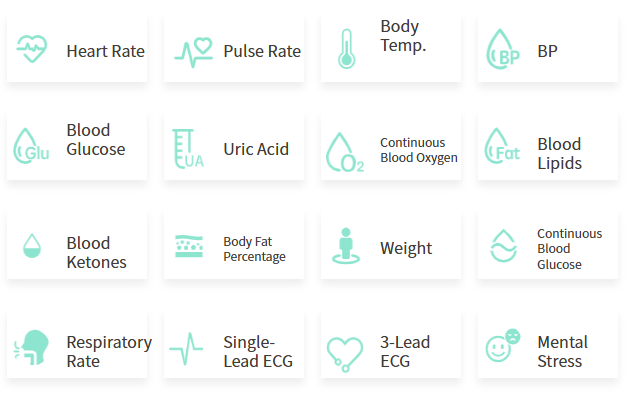
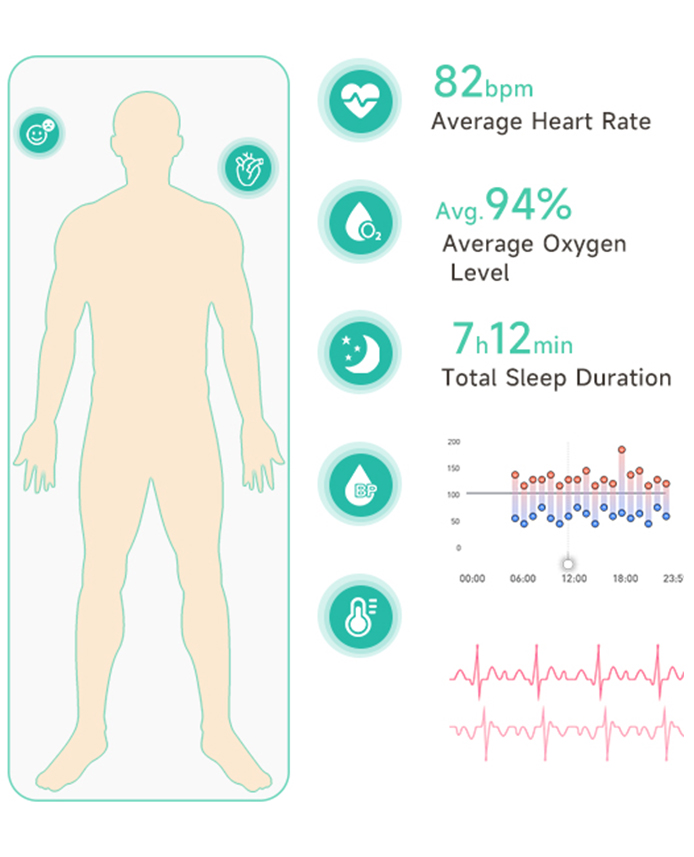
Real-time monitoring of the wearer's heart rate, blood oxygen levels blood pressure, and other vital signs.
Exercise Data
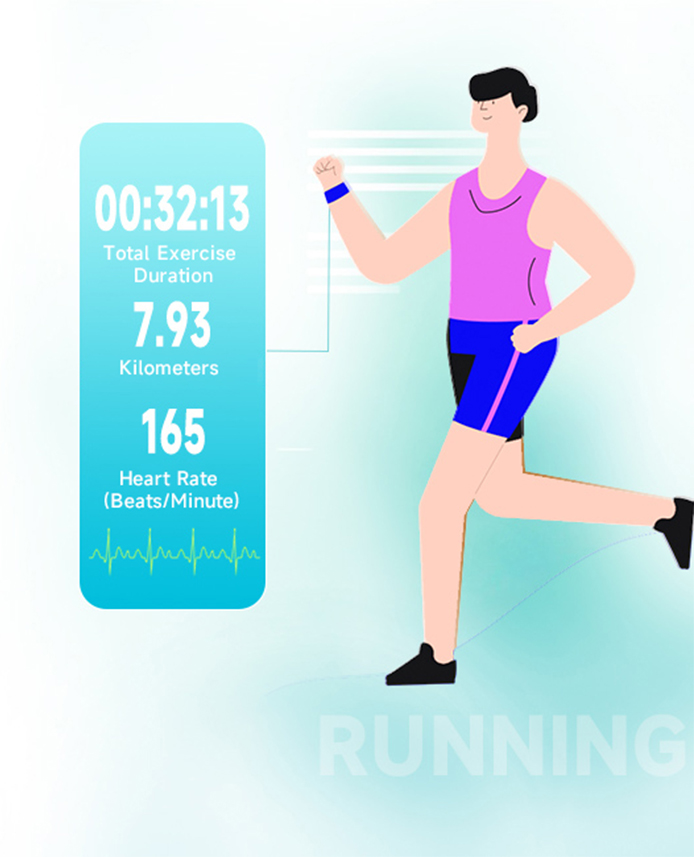
Steps, 24-hour activity, standing time, 100+ exercise calories
Recommended Exercises
Hiking, Push-ups, Core Training, Rowing Machine, Running (GPS), Cycling (GPS), Aerobics,Walking (GPS), Strength Training, Plank, Pilates, Squats, IndoorWalking, Indoor Fitness,Indoor Running, Indoor Cycling, Jump Rope, Triathlon, Group Exercise.....
Fitness Exercises
CrossFit, Trampoline, Combat Fitness, Pull-ups, Barbells, Functional Tiraining, Butterfly Machine, Swordsmanship, Fencing, Karate, Stretching, Treadmill, Equeestrian, Stair Climber,Boxing, Judo, Flexibility Training, Archery, Parallel Bars......
Ball Sports
Baseball, Cricket, Bowling, Squash, Rugby, Golf, Jai Alai, Softball, Croqjuet, Volleyball, Table Tennis, Field Hockey, Handball, Billiards, Sepak Takraw, Basketbpall, Badminton, Soccer
Water Sports
Sailing, Open Water Swimming, Rowing, Paddleboarding, Jet Skkiing, Rafting, Kayaking......
Dance
Ballet, Belly Dance, Square Dance, Ballroom Dance, Street Dance,Jazz Dance, Latin Dance
Winter Sports
Curling, Ice Hockey, Snowboarding, Alpine Skiing, Ice Skating, Skiing, Indoor Ice Skating,Skiing (Dual Board), Bobsledding, Sledding, Cross-Country Skiirng......
Safety and Environmental Data
Safety Data:
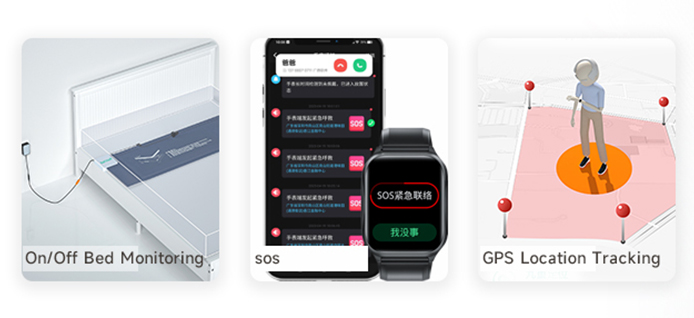
GPS Location
SOS Emergency Alert
In/Out of Bed Monitoring
Environmental Data:
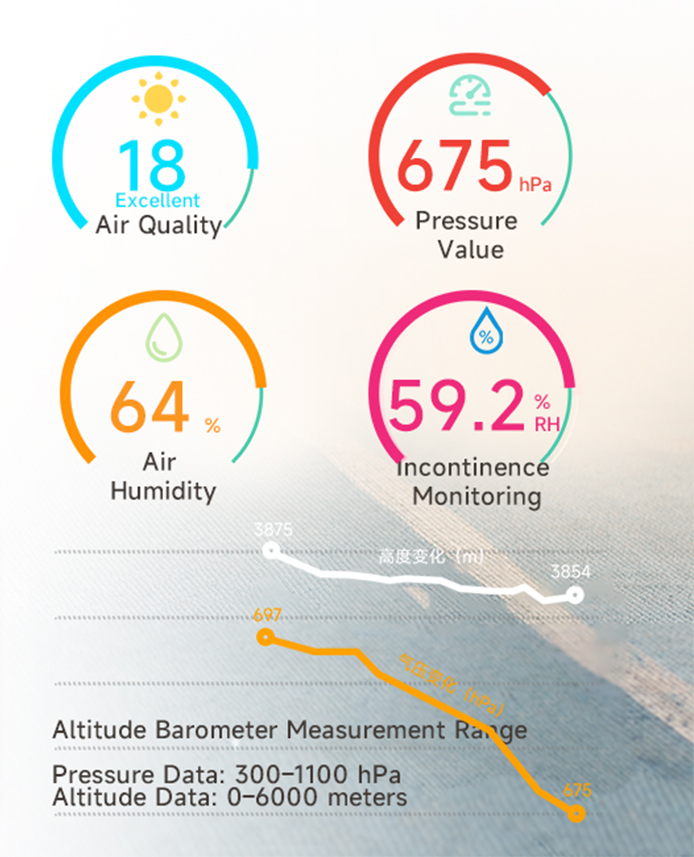
Air Quality
Barometric Pressure
Temperature and Humidity Raw Data
Incontinence Odor Monitoring
Vital Signs Data
Real-time monitoring of the wearer's heart rate, blood oxygen levels blood pressure, and other vital signs.
Exercise Data
Steps, 24-hour activity, standing time, 100+ exercise calories
Recommended Exercises
Hiking, Push-ups, Core Training, Rowing Machine, Running (GPS), Cycling (GPS), Aerobics,Walking (GPS), Strength Training, Plank, Pilates, Squats, IndoorWalking, Indoor Fitness,Indoor Running, Indoor Cycling, Jump Rope, Triathlon, Group Exercise.....
Fitness Exercises
CrossFit, Trampoline, Combat Fitness, Pull-ups, Barbells, Functional Tiraining, Butterfly Machine, Swordsmanship, Fencing, Karate, Stretching, Treadmill, Equeestrian, Stair Climber,Boxing, Judo, Flexibility Training, Archery, Parallel Bars......
Ball Sports
Baseball, Cricket, Bowling, Squash, Rugby, Golf, Jai Alai, Softball, Croqjuet, Volleyball, Table Tennis, Field Hockey, Handball, Billiards, Sepak Takraw, Basketbpall, Badminton, Soccer
Water Sports
Sailing, Open Water Swimming, Rowing, Paddleboarding, Jet Skkiing, Rafting, Kayaking......
Dance
Ballet, Belly Dance, Square Dance, Ballroom Dance, Street Dance,Jazz Dance, Latin Dance
Winter Sports
Curling, Ice Hockey, Snowboarding, Alpine Skiing, Ice Skating, Skiing, Indoor Ice Skating,Skiing (Dual Board), Bobsledding, Sledding, Cross-Country Skiirng......
Safety and Environmental Data
Safety Data
GPS Location
SOS Emergency Alert
In/Out of Bed Monitoring
Environmental Data
Air Quality
Barometric Pressure
Temperature and Humidity Raw Data
Incontinence Odor Monitoring
Principle of Key Parameters
Heart Rate Measurement:
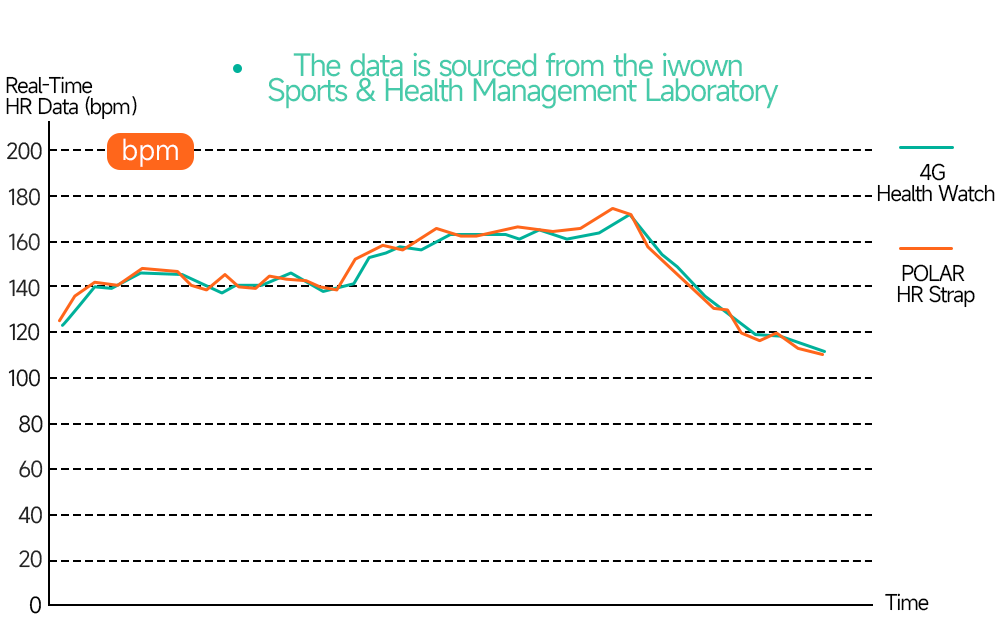
Our smartwatch uses a photoplethysmography (PPG) sensor to measure heart rate. This sensor is composed of a light-emitting diode (LED) and a photodiode, which work together to capture reflected light. PPG is typically used to monitor heart rate (HR), blood oxygen saturation (SpO2), and respiratory rate (RR).
In this process, the green LED in the PPG sensor emits light that penetrates the skin and reaches the blood vessels beneath it. Hemoglobin in the blood absorbs some of the light, and the unabsorbed light is reflected back. The photodiode in the Aiwei watch captures the reflected light and converts it into an electrical signal. These signals are then amplified, filtered, and analyzed by algorithms to produce pulse waveforms, from which the number of heartbeats per minute (BPM) is calculated. This method is portable, non-invasive, and achieves an accuracy rate of up to 95%.
Parameter | Specification |
Sensing Method | PPG |
Measurement Range | 40 bpm to 200 bpm |
Resolution | 1 bpm |
Automatic Measurement | Every 10 minutes |
Daily Automatic Heart Rate Measurements | 144 readings |
Accuracy | 95 % |
Bias | ± 5 bpm |
Continuous Blood Oxygen Measurement Principle
Arterial hemoglobin functional oxygen saturation (%SpO2) is measured using a dual-wavelength pulse oximetry method, which is a continuous and non-invasive process. The sensor emits light at specific wavelengths, which passes through the subject's peripheral tissue. The light that is not absorbed by the tissue is detected by the photodetector in the sensor, capturing the subject's pulse signal. This data is then used to calculate the saturation level of the pulse oximeter and the pulse rate.
The principle is based on the absorption spectrum characteristics of reduced hemoglobin (Hb) and oxygenated hemoglobin (HbO2) in the red and near-infrared light regions. Using Lambert-Beer's law, an empirical data processing formula is established. The device combines photoplethysmography (PPG) with photometric blood oxygen detection technology. It uses two beams of light with different wavelengths that shine on the fingertip, and the photodetector captures the measurement signals to determine blood oxygen saturation.
Parameter | Specification |
Sensing Method | Fingertip Oxygen Sensor |
Measurement Range | 70~100% |
Resolution | 1% |
Accuracy | 70~100%:1. 986 Arms |
Bias | 70~100% |
Nominal Wavelength | Red: 660 nm Infra-Red: 900 nm |
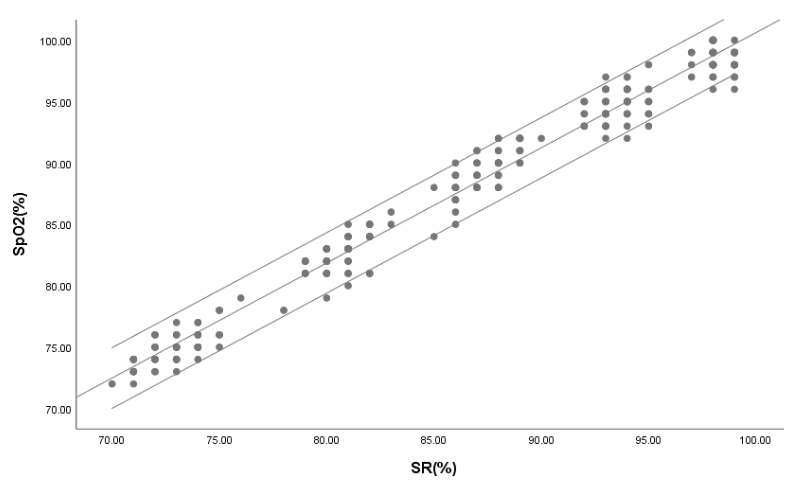
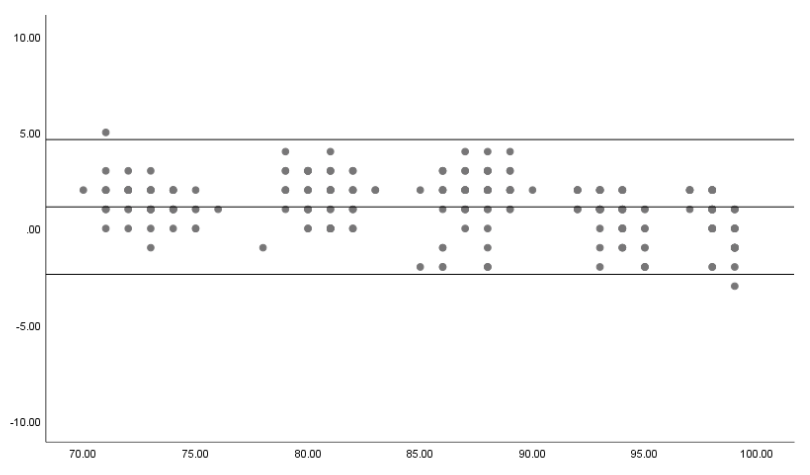
The accuracy of pulse oxygen saturation (SpO₂) was measured in a desaturation study conducted on 11 healthy volunteers at the First Affiliated Hospital of Ningbo University. The study was performed under random induction of hypoxia and meets the YYO784-2010 standard.
In an invasive study, our smartwatch model HW-102C with the HWSP-0001 probe was compared to a reference device for oxygen saturation (SaO₂). The Bland-Altman scatter plot showed a correlation of 99.3% with a sample size of N=272.
Atrial Fibrillation Detection Principle
Atrial fibrillation (AFib) is a common type of cardiac arrhythmia. The Aiwei smartwatch monitors AFib using Photoplethysmography (PPG) and Electrocardiogram (ECG) technologies. The PPG sensor uses a green LED to emit light that penetrates the skin, and the photodiode detects changes in the reflected light, which reflect variations in blood volume, allowing the identification of irregular heart rhythms.
Common AFib Detection Principle:
The smartwatch measures the interval between successive heartbeats (RR interval). In a healthy individual, the RR interval tends to be regular and stable. However, in individuals with AFib, the RR interval exhibits continuous abnormal variations. When there are multiple irregular RR interval changes within a short period, it is identified as an irregular heartbeat. If multiple irregular heartbeat events occur within a certain period, it is considered a suspected case of AFib. Typically, the condition is flagged if three or more irregular heartbeat events occur in a single day.
ECG (Electrocardiogram):
ECG technology detects the electrical activity of the heart through electrodes, generating an electrocardiogram. It analyzes changes in the QRS complex and P waves to identify AFib characteristics. Using these technologies, the smartwatch can monitor and warn of AFib in real-time, non-invasively, helping users detect and manage heart health issues early.
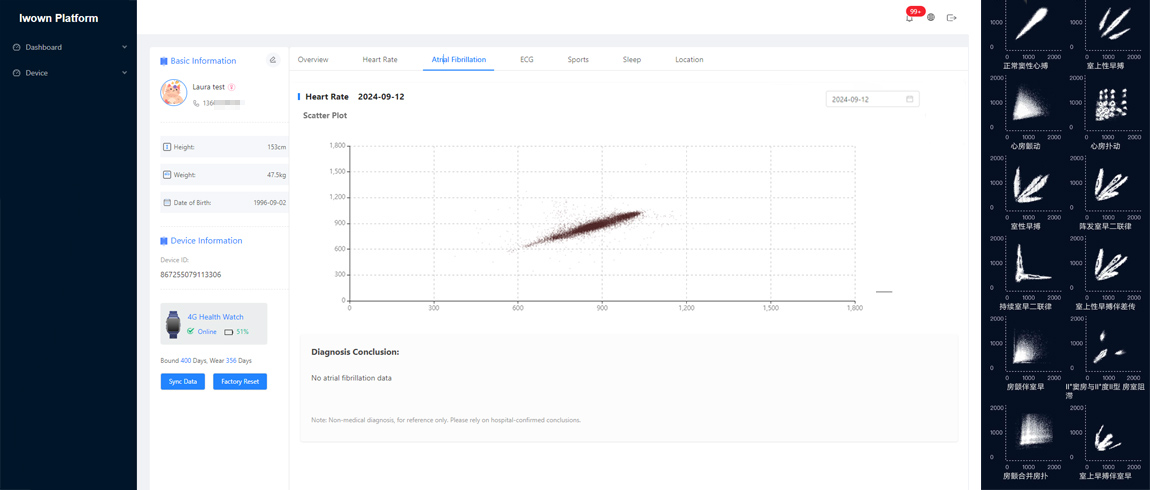
Scatter Plot:Based on nonlinear chaos theory, this method relies on computer rapid computing technology to graphically represent long-term RR interval data. It is used in the diagnosis of heart rate variability and arrhythmias.
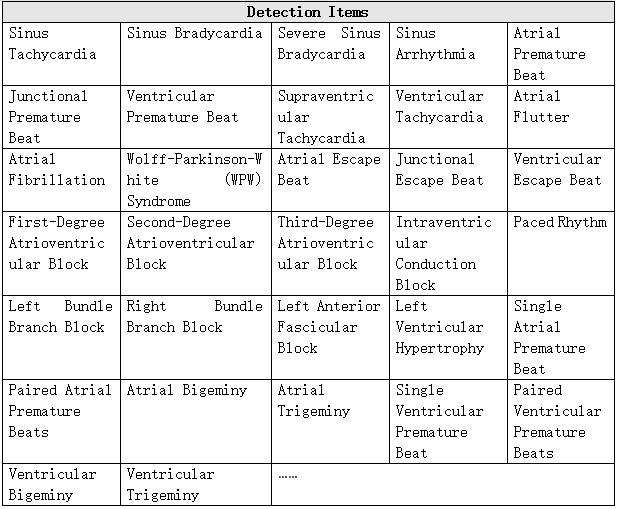
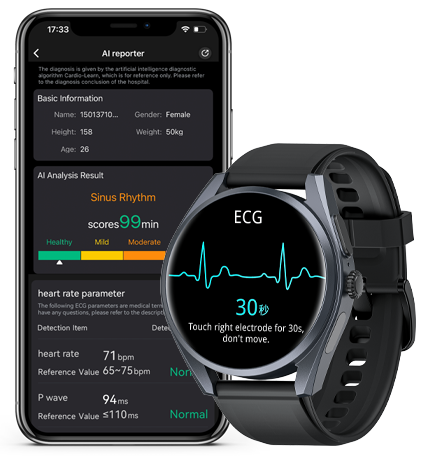
Based on the AI algorithm Cardio-Learn, the system provides analysis recommendations for ECG examinations, health scores, analysis results, abnormal conclusion interpretations, heart rate variability, ECG scatter plot distributions, and more. It also offers a family and friends monitoring feature, allowing users to track the heart health of their loved ones. The AI interpretations are clear and easy to understand, covering over 30 types of heart disease conclusions, accounting for more than 97% of clinical diagnoses, with an accuracy rate exceeding 95%.
Working Principle of Step Counting
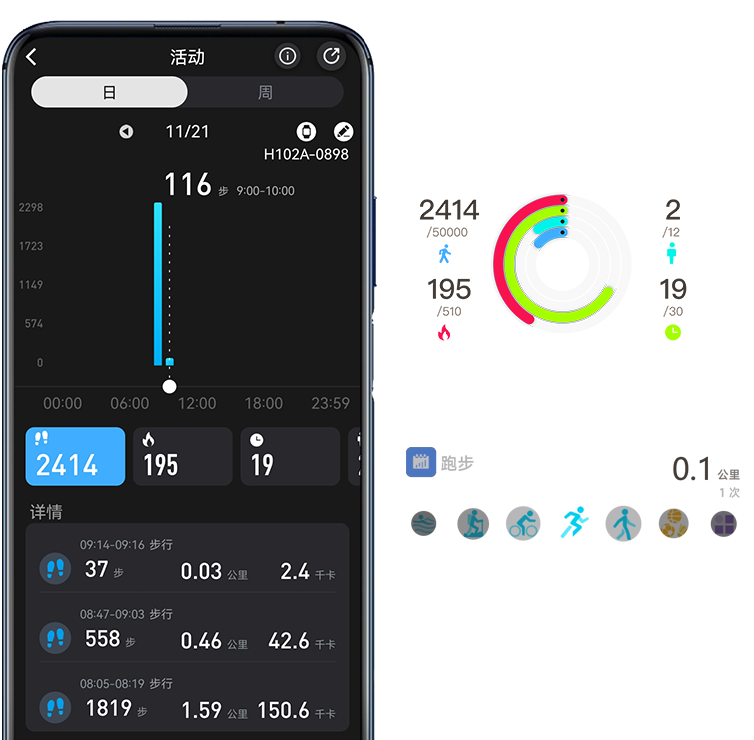
Step Count Calculation: The step count is determined by a proprietary algorithm based on the intensity and frequency of the user's acceleration data.Acceleration Sensor: The Aiwei watch is equipped with a built-in three-axis accelerometer that detects movement changes in different directions.Data Collection: The sensor continuously collects real-time acceleration data, capturing the magnitude and frequency of the user’s movements.Signal Processing: Through signal processing algorithms, the changes in acceleration are converted into step counts. The algorithm recognizes typical gait patterns and filters out the signals corresponding to steps.
Step Count Calculation: The system accumulates the detected steps and displays the current step count.
Step Count Accuracy
Calibration and Filtering: The algorithm calibrates the sensor data and filters out errors and non-gait movements, such as hand swings.Personalized Adjustment: It can be adjusted based on the user’s height, weight, and other parameters to improve step count accuracy.
Parameter | Specification |
Sensing Method | G-sensor |
Display Range | 0~999999 |
Default Goal | 10000 |
Bias | ±5% |


Copyright © 2025 iwownfit. All Rights Reserved.
Copyright © Shenzhen IWOWN Technology Co.,Ltd. All Rights Reserved.
 Cherry