




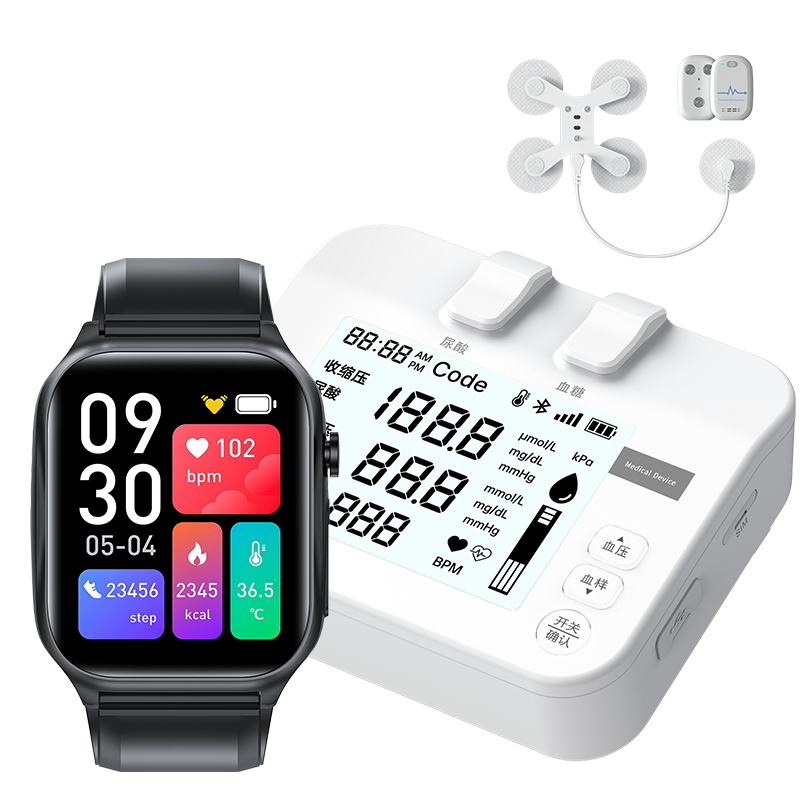
Real-time Heart Rate Monitoring
Tracks heart rate changes to avoid arrhythmia or blood circulation issues post-surgery.
Blood Oxygen Saturation Monitoring
Post-surgery patients are prone to hypoxia; the smartwatch continuously monitors blood oxygen levels and provides alerts for any oxygen deficiency risks.
Activity and Rehabilitation Tracking
Monitors the patient's physical activity and steps to help doctors assess the recovery progress, ensuring that the patient avoids both over-exertion and insufficient movement.
Sleep Monitoring
Post-surgery patients need quality sleep for optimal recovery. The smartwatch tracks sleep quality and identifies any abnormal sleep patterns.
Fatigue and Stress Assessment
Using HRV (Heart Rate Variability), the smartwatch evaluates recovery status and helps avoid overexertion that may hinder the rehabilitation process.
AI + Digital Outpatient Rehabilitation Management Service Flow
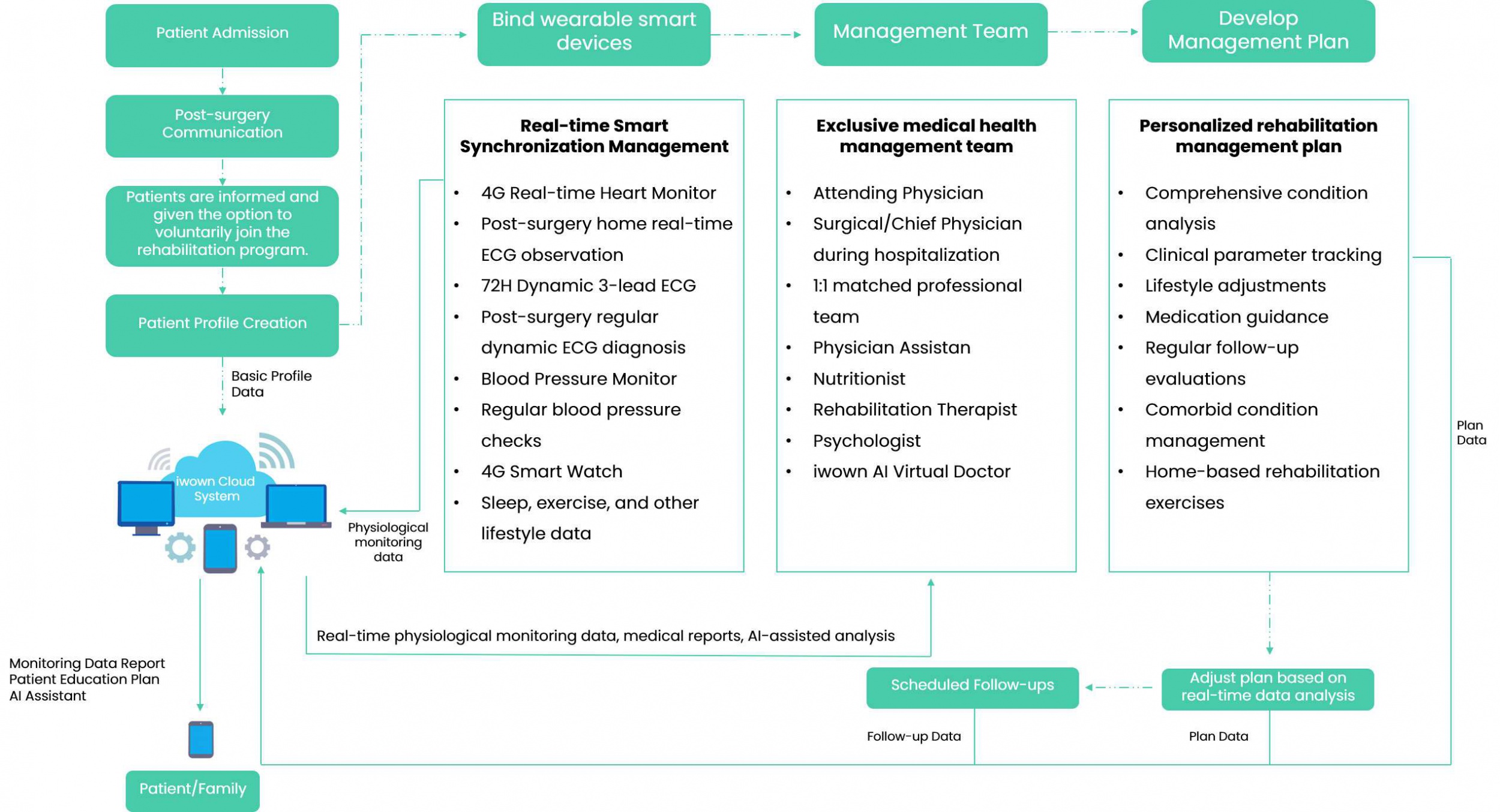
AI + Digital Cardiovascular Disease Outpatient Rehabilitation Management: Win-Win for All Parties

Patients
Improve clinical outcomes
Enhance quality of life
Strengthen management awareness
Reduce medical expenses

Doctors
Improve doctor-patient relationships
Expand patient base
Increase influence in the field
Generate legitimate and reasonable income

Departments
Optimize patient structure
Enhance diagnostic and treatment efficiency
Produce research results
Strengthen department capabilities

Hospitals
Increase patient flow
Strengthen research capabilities
Boost medical income
Enhance social influence
Advantages

Seamless Continuous Monitoring, Reducing Patient Burden
The smartwatch is worn all day, automatically collecting data without manual operation, reducing the complexity of rehabilitation management and improving feasibility.
Data-Driven Personalized Rehabilitation Plans
AI data analysis optimizes postoperative recovery suggestions, making rehabilitation plans more targeted and improving treatment outcomes.

Smart Rehabilitation Reminders, Enhancing Compliance
Personalized notifications and voice reminders help patients better follow their rehabilitation plans, ensuring optimal post-surgery recovery.

Emergency Alerts and Rapid Response
When abnormal data is detected, the system automatically triggers an SOS alert and notifies doctors or family members, ensuring the patient receives timely intervention.

Remote Monitoring, Reducing Recurrence Risk
Healthcare professionals can remotely manage data to track patients' real-time conditions, enabling early intervention for potential postoperative risks and enhancing recovery safety.

Adaptable to Various Postoperative Rehabilitation Scenarios
Suitable for cardiovascular, orthopedic, neurological rehabilitation (e.g., stroke recovery), cancer surgery recovery, and other patient groups, meeting the needs of hospitals, rehabilitation centers, and home-based recovery scenarios.


Copyright © 2025 iwownfit. All Rights Reserved.
Copyright © Shenzhen IWOWN Technology Co.,Ltd. All Rights Reserved.
 Cherry