


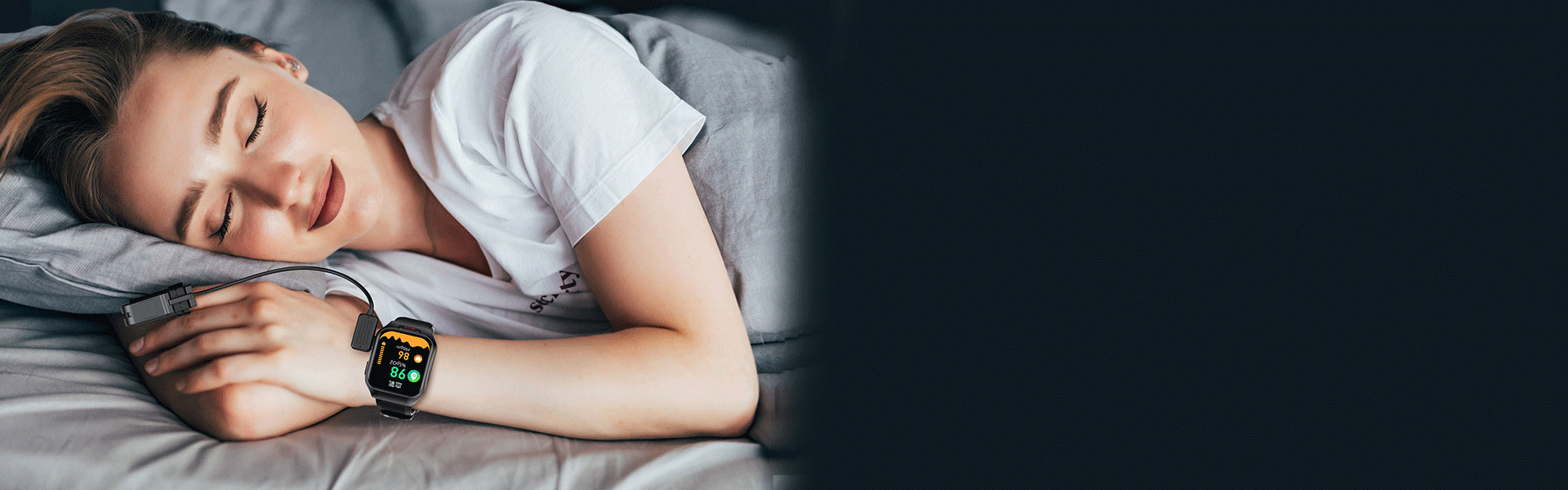


Difficulty in Early Detection
Many patients experience symptoms like snoring, waking up at night, and daytime drowsiness, but due to the lack of continuous monitoring, they often go undiagnosed, which leads to long-term health risks.

Traditional Diagnostic Methods Are Costly and Complex
Hospital-based polysomnography (PSG) requires patients to stay overnight, making the process expensive and complicated, and many patients find it difficult to tolerate.

Lack of Home Monitoring for Long-term Tracking
Relying only on one-time hospital tests makes it difficult to track long-term changes in the condition, and the lack of effective daily management leads to the condition being neglected or worsening over time.
Sleep Apnea Monitoring Smartwatch
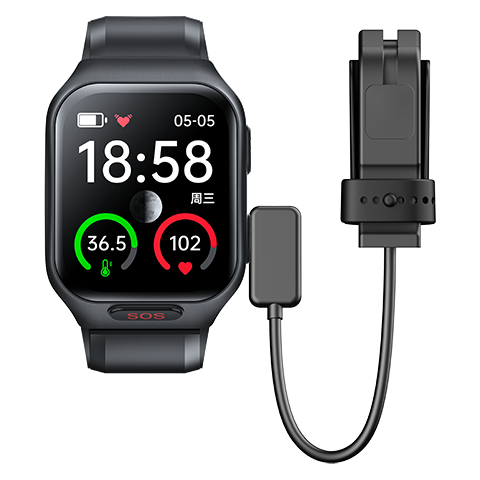
Device Combination:
Smartwatch + Blood Oxygen Clip: High-precision sensors for real-time blood oxygen monitoring, providing continuous data.
Monitoring Content:
Blood Oxygen Levels (SpO₂): Detection of hypoxic events to identify the risk of nocturnal oxygen deprivation.
Apnea Events: Identifying abnormal breathing pauses by analyzing fluctuations in blood oxygen levels and heart rate changes.
Sleep Quality Analysis: Tracking sleep duration, deep sleep percentage, and night awakenings.
Heart Rate & HRV: Monitoring sympathetic and parasympathetic nervous system activity to analyze sleep stress.
Data Processing:
Cloud-based Smart Analysis: Device data is uploaded to the app/cloud platform, automatically generating health reports.
Abnormal Alerts: Vibrations from the smartwatch alert the user if low oxygen or prolonged apnea is detected.
Trend Reports: Long-term tracking of sleep health for self-management by the user or for review by healthcare professionals.
Advantages

Non-invasive and Convenient, Suitable for Long-term Home Monitoring
With easy-to-use wearable devices, users can effortlessly track their sleep health and other vital signs without the need for complex procedures or frequent hospital visits.

AI Smart Analysis, Real-time Alerts
By combining multiple physiological parameters, the AI algorithm can automatically detect abnormal sleep events and provide real-time alerts, reducing health risks.

High-precision Blood Oxygen Monitoring
Accurately detects hypoxic events.
The medical-grade smart device, combined with AI algorithms, effectively reduces motion artifacts and enhances data reliability.

Remote Data Sharing, Supporting Doctor Remote Intervention
Monitoring data can be uploaded to the cloud for doctors to view and analyze, offering professional health advice for high-risk users and preventing worsening conditions.
Multidimensional Health Monitoring, Comprehensive Sleep Quality Assessment
In addition to blood oxygen levels, the system monitors heart rate, HRV, and body movement data, providing a comprehensive sleep health analysis to help users optimize sleep quality.

Lowered Medical Barriers, Increased Screening Efficiency
Users can perform long-term monitoring at home, reducing the need for frequent PSG tests at the hospital, enhancing early detection rates, and avoiding health risks due to delayed diagnoses.


Copyright © 2025 iwownfit. All Rights Reserved.
Copyright © Shenzhen IWOWN Technology Co.,Ltd. All Rights Reserved.
 Cherry