


Wearable Medical Devices: Types, Applications & Future Trends in Digital Healthcare
2026-07-15 11:50:36
Click:
“
Wearable Medical Devices: Types, Applications & Future Trends in Digital Healthc
”
Wearable Medical Devices: Types, Applications & Future Trends in Digital Healthcare
Healthcare Is Moving Beyond the Hospital
For decades, healthcare has relied on periodic consultations to evaluate a patient's condition. Whether managing chronic diseases, monitoring recovery after surgery, or conducting routine health assessments, most clinical decisions have traditionally been based on measurements collected during scheduled visits.
However, this model is no longer sufficient.
The rapid growth of chronic diseases, aging populations, and increasing pressure on healthcare resources has accelerated the demand for continuous, data-driven care. Healthcare providers are looking for solutions that extend clinical visibility beyond hospitals while improving patient outcomes and operational efficiency.
This is where wearable medical devices are changing healthcare.
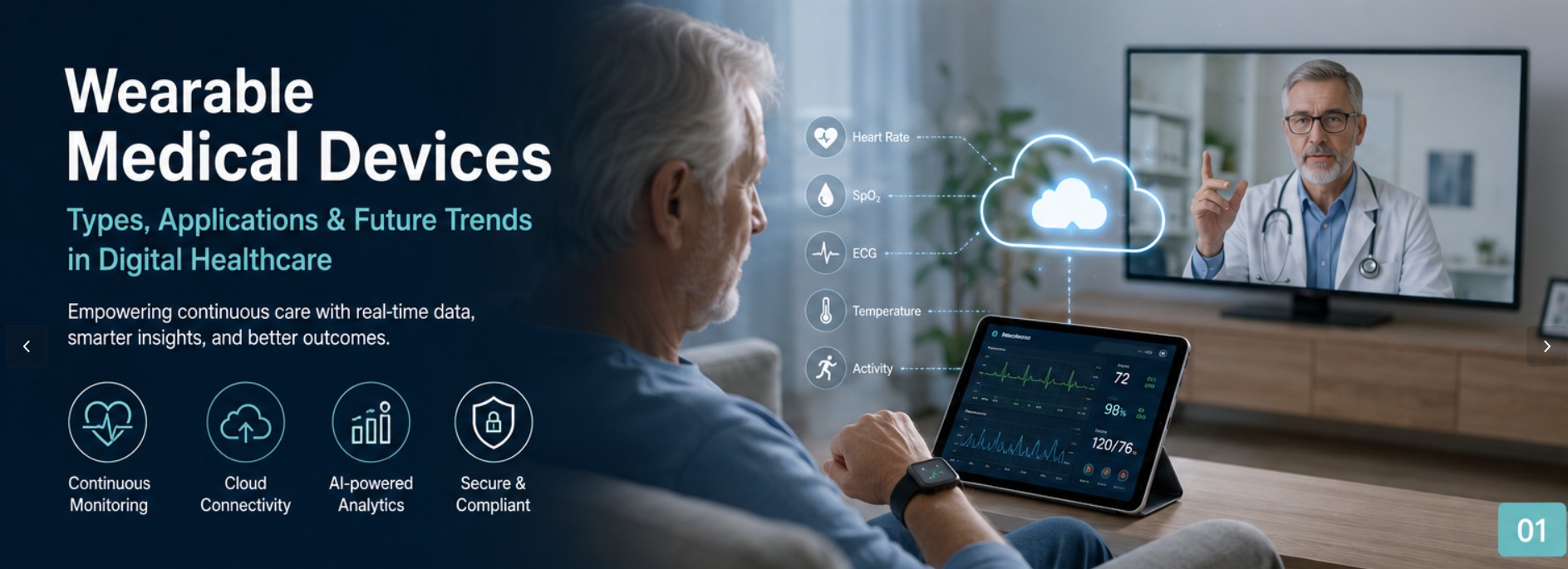
Unlike consumer wearables designed primarily for fitness tracking, wearable medical devices continuously collect clinically meaningful physiological data that supports remote patient monitoring, chronic disease management, elderly care, and preventive healthcare.
Today, wearable technologies are becoming an essential component of digital healthcare ecosystems, helping healthcare organizations deliver personalized, connected, and proactive care.
What Are Wearable Medical Devices?
Wearable medical devices are electronic health monitoring devices worn on the body to continuously or periodically measure physiological parameters and securely transmit data to healthcare professionals or digital health platforms.
Unlike traditional medical equipment that is used only during clinical visits, wearable devices enable health monitoring throughout daily life, providing clinicians with a more comprehensive understanding of a patient's condition over time.
Modern wearable medical devices often integrate advanced biosensors, wireless communication technologies, and cloud-based analytics to support real-time monitoring and long-term health management.
Depending on the application, wearable medical devices may monitor:
l Electrocardiogram (ECG)
l Heart rate
l Blood oxygen saturation (SpO₂)
l Blood pressure trends
l Skin temperature
l Respiratory rate
l Sleep quality
l Physical activity
l Fall events
l Stress indicators
The collected data is transmitted to secure digital health platforms where clinicians, caregivers, or healthcare organizations can review trends, receive alerts, and support timely interventions.
Unlike consumer electronics, wearable medical devices are designed with healthcare workflows, long-term monitoring, and clinical decision support in mind.
Medical Wearables vs. Consumer Wearables
The terms wearable devices and medical wearables are often used interchangeably, but they serve different purposes.
Consumer wearables are primarily designed to promote healthier lifestyles by tracking fitness activities, daily movement, or general wellness metrics. While many consumer products offer heart rate or sleep tracking features, they are not intended to replace professional medical monitoring.
Medical wearable devices, on the other hand, are developed to support healthcare delivery. They prioritize data consistency, long-term monitoring, integration with healthcare systems, and the ability to support clinicians in managing patient care.
For healthcare organizations, selecting a medical wearable is not simply about the number of available features. Factors such as clinical reliability, patient compliance, interoperability, cybersecurity, and scalability are significantly more important than consumer-oriented functions.
This distinction becomes increasingly critical as healthcare providers expand Remote Patient Monitoring (RPM) programs and integrate wearable technologies into routine clinical workflows.
Types of Wearable Medical Devices
Wearable medical devices continue to evolve rapidly, supporting a wide range of healthcare applications. While products vary depending on clinical objectives, most solutions fall into several major categories.
ECG Smartwatches
ECG smartwatches combine wearable convenience with continuous cardiovascular monitoring.
In addition to tracking heart rate throughout the day, many devices can record electrocardiograms, enabling clinicians to monitor cardiac rhythm remotely and identify potential abnormalities that require further evaluation.
These devices are increasingly used in:
l Cardiac rehabilitation
l Hypertension management
l Remote cardiac monitoring
l Preventive cardiovascular care
l Corporate wellness programs
Their ability to combine multiple physiological indicators into a single wearable makes them an attractive option for large-scale digital healthcare deployments.
Wearable ECG Patches
Unlike smartwatches, wearable ECG patches are designed for continuous cardiac monitoring over extended periods.
These lightweight adhesive devices remain attached to the chest, allowing uninterrupted ECG recording without requiring patient interaction.
Healthcare providers frequently use ECG patches for:
Arrhythmia detection
Long-term rhythm monitoring
Post-discharge observation
Cardiology diagnostics
Remote cardiac care
Because patients can continue normal daily activities while wearing the patch, clinicians receive more representative data than they would during a short clinic visit.
Related Solution: Heart Health Monitoring
https://iwownfit.com/content/3031655.html
Medical Smart Bands
Medical smart bands provide a lightweight alternative for long-term health monitoring.
These devices typically combine multiple sensors to continuously monitor heart rate, blood oxygen saturation, activity levels, sleep quality, and other physiological indicators.
Their compact design improves wearing comfort, making them suitable for elderly care, chronic disease management, and community healthcare programs where long-term patient adherence is essential.
Blood Pressure Monitoring Watches
Advances in wearable sensing technologies have enabled the development of blood pressure monitoring watches that provide regular blood pressure trend measurements alongside other physiological parameters.
For patients with hypertension, these devices support more frequent monitoring without the inconvenience of carrying traditional cuff-based equipment throughout the day.
Although cuff-based devices remain the clinical reference for scheduled measurements, wearable blood pressure monitoring contributes valuable trend information that supports long-term cardiovascular management.
Related Product: Healthcare Wearables
https://iwownfit.com/healthcare-watches
Healthcare Applications of Wearable Medical Devices
Wearable medical devices are no longer limited to fitness tracking or personal wellness. Today, they are deployed across hospitals, telehealth platforms, community healthcare programs, and home care services to support continuous patient management.
As healthcare shifts toward preventive and value-based care, wearable technologies are becoming a core component of digital health infrastructure.
Chronic Disease Management
Patients living with chronic diseases require long-term observation rather than occasional assessments.
Wearable medical devices enable healthcare professionals to continuously monitor physiological indicators and identify subtle changes before they develop into serious complications.
Common chronic disease applications include:
l Hypertension management
l Cardiovascular disease monitoring
l Diabetes support
l COPD management
l Heart failure follow-up
Instead of relying solely on periodic clinic visits, clinicians can review longitudinal health trends and adjust treatment plans based on real-world patient data.
Remote Patient Monitoring (RPM)
Wearable devices are the primary data collection tools in most Remote Patient Monitoring programs.
By continuously transmitting physiological information to secure cloud platforms, they allow healthcare providers to monitor patients regardless of location.
This supports:
Early risk identification
Personalized care planning
Continuous follow-up
Reduced unnecessary hospital visits
Better allocation of healthcare resources
Related Reading: Remote Patient Monitoring Devices
https://iwownfit.com/remote-patient-monitoring.html
Elderly Care
The global aging population is creating growing demand for technologies that help older adults live safely and independently.
Wearable medical devices designed for elderly care often combine multiple functions within a single device, including:
l Heart rate monitoring
l Blood oxygen monitoring
l Fall detection
l GPS positioning
l Emergency SOS
l Activity tracking
l Sleep monitoring
These features allow caregivers and family members to receive timely alerts while reducing the need for continuous in-person supervision.
Combined with cloud-based monitoring platforms, wearable devices provide peace of mind for both healthcare professionals and families.
Related Solution: Fall Detection
https://iwownfit.com/solutions-fall-alert-system
Post-Discharge Care
The period immediately following hospital discharge is often associated with an increased risk of complications and readmissions.
Wearable medical devices enable healthcare providers to monitor recovery remotely without requiring frequent follow-up visits.
Clinicians can track changes in heart rate, blood oxygen saturation, activity levels, and sleep quality to identify potential issues earlier and intervene before conditions worsen.
This not only improves patient outcomes but also reduces healthcare costs associated with avoidable readmissions.
Telehealth
Telehealth consultations become significantly more valuable when clinicians have access to objective physiological data collected outside clinical settings.
Instead of relying solely on patient descriptions of symptoms, healthcare professionals can review continuous health data collected through wearable devices before or during virtual consultations.
This creates a more complete clinical picture and supports more informed medical decisions.
Benefits of Wearable Medical Devices
Healthcare organizations continue to invest in wearable technologies because they deliver measurable benefits for patients, clinicians, and healthcare systems alike.
Continuous Health Visibility
Unlike periodic measurements, wearable devices provide continuous physiological information, allowing clinicians to observe trends rather than isolated data points.
This helps identify gradual health changes that might otherwise remain unnoticed.
Earlier Risk Detection
Continuous monitoring increases the likelihood of identifying abnormal physiological patterns before symptoms become severe.
Earlier intervention often leads to improved clinical outcomes and more efficient treatment.
Better Patient Engagement
Patients who can view their own health data are often more engaged in managing their conditions.
Automatic monitoring also reduces the burden of manually recording health information, making long-term participation easier.
Improved Operational Efficiency
RPM programs supported by wearable devices allow healthcare organizations to prioritize patients based on clinical need rather than fixed appointment schedules.
This helps optimize clinical resources while improving access to care.
Support for Preventive Healthcare
Perhaps the greatest value of wearable medical devices is their ability to shift healthcare from reactive treatment toward proactive prevention.
Continuous monitoring enables clinicians to identify trends, provide personalized recommendations, and support healthier outcomes before disease progression occurs.
Buying Guide: How to Choose the Right Wearable Medical Device
Choosing a wearable medical device involves more than comparing specifications.
Healthcare providers should evaluate solutions based on long-term clinical value.
When selecting wearable technologies, consider the following questions:
Does the device provide reliable physiological data?
Is it comfortable enough for long-term daily wear?
Can it integrate with existing healthcare platforms?
Does it support remote firmware updates and device management?
Is patient data securely protected?
Can the solution scale from pilot programs to large deployments?
Does the manufacturer provide OEM/ODM services and long-term technical support?
Organizations that evaluate the complete ecosystem—not just the hardware—are more likely to build successful digital healthcare programs.
Future Trends
The next generation of wearable medical devices will be defined by intelligence, interoperability, and predictive healthcare.
Several trends are expected to shape the future:
AI-assisted health analysis
Multi-parameter monitoring in a single device
Digital biomarkers
Continuous preventive care
Open API healthcare platforms
Integration with Electronic Health Records (EHR)
Personalized health recommendations based on long-term data
Rather than simply measuring health indicators, wearable devices will become intelligent endpoints within connected healthcare ecosystems, supporting earlier intervention and more personalized care.
Frequently Asked Questions
Are wearable medical devices the same as fitness trackers?
No. Medical wearable devices are designed to support healthcare delivery and remote monitoring, while fitness trackers primarily focus on consumer wellness and activity tracking.
Which healthcare organizations benefit most from wearable medical devices?
Hospitals, telehealth providers, nursing homes, home healthcare agencies, insurance companies, and healthcare system integrators all benefit from wearable technologies.
Can wearable medical devices replace hospital visits?
No. They complement clinical care by providing continuous health data between appointments, helping clinicians make more informed decisions.
What is the biggest advantage of wearable medical devices?
Continuous monitoring enables earlier detection of health changes, supports proactive care, and improves long-term disease management.
Conclusion
Wearable medical devices are transforming the way healthcare is delivered. By enabling continuous monitoring, improving patient engagement, and supporting data-driven clinical decision-making, they have become an essential component of modern digital healthcare.
However, the value of wearable technologies extends beyond the devices themselves. Successful deployments require an integrated ecosystem that combines reliable hardware, secure connectivity, cloud-based analytics, and seamless healthcare system integration.
For healthcare organizations planning digital transformation initiatives, investing in scalable, interoperable wearable medical solutions is no longer simply an innovation strategy—it is becoming a fundamental requirement for delivering efficient, connected, and patient-centered care.
Call to Action
Whether you're building a Remote Patient Monitoring program, developing a telehealth platform, or looking for a trusted OEM/ODM partner, choosing the right wearable medical technology is critical to long-term success.
At iWOWN, we provide comprehensive digital healthcare solutions that combine medical wearable devices, cloud connectivity, IoT integration, and customized OEM/ODM development to support hospitals, healthcare providers, and digital health companies worldwide.
Explore our Healthcare Wearables:
https://iwownfit.com/healthcare-watches
Contact our team to discuss your project:
https://iwownfit.com/contact-us









Wearable Medical Devices: Types, Applications & Future Trends in Digital Healthcare
2026-07-15 11:50:36
Click:
“
Wearable Medical Devices: Types, Applications & Future Trends in Digital Healthc
”
Wearable Medical Devices: Types, Applications & Future Trends in Digital Healthcare
Healthcare Is Moving Beyond the Hospital
For decades, healthcare has relied on periodic consultations to evaluate a patient's condition. Whether managing chronic diseases, monitoring recovery after surgery, or conducting routine health assessments, most clinical decisions have traditionally been based on measurements collected during scheduled visits.
However, this model is no longer sufficient.
The rapid growth of chronic diseases, aging populations, and increasing pressure on healthcare resources has accelerated the demand for continuous, data-driven care. Healthcare providers are looking for solutions that extend clinical visibility beyond hospitals while improving patient outcomes and operational efficiency.
This is where wearable medical devices are changing healthcare.
Unlike consumer wearables designed primarily for fitness tracking, wearable medical devices continuously collect clinically meaningful physiological data that supports remote patient monitoring, chronic disease management, elderly care, and preventive healthcare.
Today, wearable technologies are becoming an essential component of digital healthcare ecosystems, helping healthcare organizations deliver personalized, connected, and proactive care.
What Are Wearable Medical Devices?
Wearable medical devices are electronic health monitoring devices worn on the body to continuously or periodically measure physiological parameters and securely transmit data to healthcare professionals or digital health platforms.
Unlike traditional medical equipment that is used only during clinical visits, wearable devices enable health monitoring throughout daily life, providing clinicians with a more comprehensive understanding of a patient's condition over time.
Modern wearable medical devices often integrate advanced biosensors, wireless communication technologies, and cloud-based analytics to support real-time monitoring and long-term health management.
Depending on the application, wearable medical devices may monitor:
l Electrocardiogram (ECG)
l Heart rate
l Blood oxygen saturation (SpO₂)
l Blood pressure trends
l Skin temperature
l Respiratory rate
l Sleep quality
l Physical activity
l Fall events
l Stress indicators
The collected data is transmitted to secure digital health platforms where clinicians, caregivers, or healthcare organizations can review trends, receive alerts, and support timely interventions.
Unlike consumer electronics, wearable medical devices are designed with healthcare workflows, long-term monitoring, and clinical decision support in mind.
Medical Wearables vs. Consumer Wearables
The terms wearable devices and medical wearables are often used interchangeably, but they serve different purposes.
Consumer wearables are primarily designed to promote healthier lifestyles by tracking fitness activities, daily movement, or general wellness metrics. While many consumer products offer heart rate or sleep tracking features, they are not intended to replace professional medical monitoring.
Medical wearable devices, on the other hand, are developed to support healthcare delivery. They prioritize data consistency, long-term monitoring, integration with healthcare systems, and the ability to support clinicians in managing patient care.
For healthcare organizations, selecting a medical wearable is not simply about the number of available features. Factors such as clinical reliability, patient compliance, interoperability, cybersecurity, and scalability are significantly more important than consumer-oriented functions.
This distinction becomes increasingly critical as healthcare providers expand Remote Patient Monitoring (RPM) programs and integrate wearable technologies into routine clinical workflows.
Types of Wearable Medical Devices
Wearable medical devices continue to evolve rapidly, supporting a wide range of healthcare applications. While products vary depending on clinical objectives, most solutions fall into several major categories.
ECG Smartwatches
ECG smartwatches combine wearable convenience with continuous cardiovascular monitoring.
In addition to tracking heart rate throughout the day, many devices can record electrocardiograms, enabling clinicians to monitor cardiac rhythm remotely and identify potential abnormalities that require further evaluation.
These devices are increasingly used in:
l Cardiac rehabilitation
l Hypertension management
l Remote cardiac monitoring
l Preventive cardiovascular care
l Corporate wellness programs
Their ability to combine multiple physiological indicators into a single wearable makes them an attractive option for large-scale digital healthcare deployments.
Wearable ECG Patches
Unlike smartwatches, wearable ECG patches are designed for continuous cardiac monitoring over extended periods.
These lightweight adhesive devices remain attached to the chest, allowing uninterrupted ECG recording without requiring patient interaction.
Healthcare providers frequently use ECG patches for:
Arrhythmia detection
Long-term rhythm monitoring
Post-discharge observation
Cardiology diagnostics
Remote cardiac care
Because patients can continue normal daily activities while wearing the patch, clinicians receive more representative data than they would during a short clinic visit.
Related Solution: Heart Health Monitoring
https://iwownfit.com/content/3031655.html
Medical Smart Bands
Medical smart bands provide a lightweight alternative for long-term health monitoring.
These devices typically combine multiple sensors to continuously monitor heart rate, blood oxygen saturation, activity levels, sleep quality, and other physiological indicators.
Their compact design improves wearing comfort, making them suitable for elderly care, chronic disease management, and community healthcare programs where long-term patient adherence is essential.
Blood Pressure Monitoring Watches
Advances in wearable sensing technologies have enabled the development of blood pressure monitoring watches that provide regular blood pressure trend measurements alongside other physiological parameters.
For patients with hypertension, these devices support more frequent monitoring without the inconvenience of carrying traditional cuff-based equipment throughout the day.
Although cuff-based devices remain the clinical reference for scheduled measurements, wearable blood pressure monitoring contributes valuable trend information that supports long-term cardiovascular management.
Related Product: Healthcare Wearables
https://iwownfit.com/healthcare-watches
Healthcare Applications of Wearable Medical Devices
Wearable medical devices are no longer limited to fitness tracking or personal wellness. Today, they are deployed across hospitals, telehealth platforms, community healthcare programs, and home care services to support continuous patient management.
As healthcare shifts toward preventive and value-based care, wearable technologies are becoming a core component of digital health infrastructure.
Chronic Disease Management
Patients living with chronic diseases require long-term observation rather than occasional assessments.
Wearable medical devices enable healthcare professionals to continuously monitor physiological indicators and identify subtle changes before they develop into serious complications.
Common chronic disease applications include:
l Hypertension management
l Cardiovascular disease monitoring
l Diabetes support
l COPD management
l Heart failure follow-up
Instead of relying solely on periodic clinic visits, clinicians can review longitudinal health trends and adjust treatment plans based on real-world patient data.
Remote Patient Monitoring (RPM)
Wearable devices are the primary data collection tools in most Remote Patient Monitoring programs.
By continuously transmitting physiological information to secure cloud platforms, they allow healthcare providers to monitor patients regardless of location.
This supports:
Early risk identification
Personalized care planning
Continuous follow-up
Reduced unnecessary hospital visits
Better allocation of healthcare resources
Related Reading: Remote Patient Monitoring Devices
https://iwownfit.com/remote-patient-monitoring.html
Elderly Care
The global aging population is creating growing demand for technologies that help older adults live safely and independently.
Wearable medical devices designed for elderly care often combine multiple functions within a single device, including:
l Heart rate monitoring
l Blood oxygen monitoring
l Fall detection
l GPS positioning
l Emergency SOS
l Activity tracking
l Sleep monitoring
These features allow caregivers and family members to receive timely alerts while reducing the need for continuous in-person supervision.
Combined with cloud-based monitoring platforms, wearable devices provide peace of mind for both healthcare professionals and families.
Related Solution: Fall Detection
https://iwownfit.com/solutions-fall-alert-system
Post-Discharge Care
The period immediately following hospital discharge is often associated with an increased risk of complications and readmissions.
Wearable medical devices enable healthcare providers to monitor recovery remotely without requiring frequent follow-up visits.
Clinicians can track changes in heart rate, blood oxygen saturation, activity levels, and sleep quality to identify potential issues earlier and intervene before conditions worsen.
This not only improves patient outcomes but also reduces healthcare costs associated with avoidable readmissions.
Telehealth
Telehealth consultations become significantly more valuable when clinicians have access to objective physiological data collected outside clinical settings.
Instead of relying solely on patient descriptions of symptoms, healthcare professionals can review continuous health data collected through wearable devices before or during virtual consultations.
This creates a more complete clinical picture and supports more informed medical decisions.
Benefits of Wearable Medical Devices
Healthcare organizations continue to invest in wearable technologies because they deliver measurable benefits for patients, clinicians, and healthcare systems alike.
Continuous Health Visibility
Unlike periodic measurements, wearable devices provide continuous physiological information, allowing clinicians to observe trends rather than isolated data points.
This helps identify gradual health changes that might otherwise remain unnoticed.
Earlier Risk Detection
Continuous monitoring increases the likelihood of identifying abnormal physiological patterns before symptoms become severe.
Earlier intervention often leads to improved clinical outcomes and more efficient treatment.
Better Patient Engagement
Patients who can view their own health data are often more engaged in managing their conditions.
Automatic monitoring also reduces the burden of manually recording health information, making long-term participation easier.
Improved Operational Efficiency
RPM programs supported by wearable devices allow healthcare organizations to prioritize patients based on clinical need rather than fixed appointment schedules.
This helps optimize clinical resources while improving access to care.
Support for Preventive Healthcare
Perhaps the greatest value of wearable medical devices is their ability to shift healthcare from reactive treatment toward proactive prevention.
Continuous monitoring enables clinicians to identify trends, provide personalized recommendations, and support healthier outcomes before disease progression occurs.
Buying Guide: How to Choose the Right Wearable Medical Device
Choosing a wearable medical device involves more than comparing specifications.
Healthcare providers should evaluate solutions based on long-term clinical value.
When selecting wearable technologies, consider the following questions:
Does the device provide reliable physiological data?
Is it comfortable enough for long-term daily wear?
Can it integrate with existing healthcare platforms?
Does it support remote firmware updates and device management?
Is patient data securely protected?
Can the solution scale from pilot programs to large deployments?
Does the manufacturer provide OEM/ODM services and long-term technical support?
Organizations that evaluate the complete ecosystem—not just the hardware—are more likely to build successful digital healthcare programs.
Future Trends
The next generation of wearable medical devices will be defined by intelligence, interoperability, and predictive healthcare.
Several trends are expected to shape the future:
AI-assisted health analysis
Multi-parameter monitoring in a single device
Digital biomarkers
Continuous preventive care
Open API healthcare platforms
Integration with Electronic Health Records (EHR)
Personalized health recommendations based on long-term data
Rather than simply measuring health indicators, wearable devices will become intelligent endpoints within connected healthcare ecosystems, supporting earlier intervention and more personalized care.
Frequently Asked Questions
Are wearable medical devices the same as fitness trackers?
No. Medical wearable devices are designed to support healthcare delivery and remote monitoring, while fitness trackers primarily focus on consumer wellness and activity tracking.
Which healthcare organizations benefit most from wearable medical devices?
Hospitals, telehealth providers, nursing homes, home healthcare agencies, insurance companies, and healthcare system integrators all benefit from wearable technologies.
Can wearable medical devices replace hospital visits?
No. They complement clinical care by providing continuous health data between appointments, helping clinicians make more informed decisions.
What is the biggest advantage of wearable medical devices?
Continuous monitoring enables earlier detection of health changes, supports proactive care, and improves long-term disease management.
Conclusion
Wearable medical devices are transforming the way healthcare is delivered. By enabling continuous monitoring, improving patient engagement, and supporting data-driven clinical decision-making, they have become an essential component of modern digital healthcare.
However, the value of wearable technologies extends beyond the devices themselves. Successful deployments require an integrated ecosystem that combines reliable hardware, secure connectivity, cloud-based analytics, and seamless healthcare system integration.
For healthcare organizations planning digital transformation initiatives, investing in scalable, interoperable wearable medical solutions is no longer simply an innovation strategy—it is becoming a fundamental requirement for delivering efficient, connected, and patient-centered care.
Call to Action
Whether you're building a Remote Patient Monitoring program, developing a telehealth platform, or looking for a trusted OEM/ODM partner, choosing the right wearable medical technology is critical to long-term success.
At iWOWN, we provide comprehensive digital healthcare solutions that combine medical wearable devices, cloud connectivity, IoT integration, and customized OEM/ODM development to support hospitals, healthcare providers, and digital health companies worldwide.
Explore our Healthcare Wearables:
https://iwownfit.com/healthcare-watches
Contact our team to discuss your project:
https://iwownfit.com/contact-us


Copyright © 2025 iwownfit. All Rights Reserved.
Copyright © Shenzhen IWOWN Technology Co.,Ltd. All Rights Reserved.
 Cherry