


Remote Patient Monitoring Devices: Types, Benefits & Buying Guide for Healthcare Providers
2026-07-08 14:29:05
Click:
“
Remote Patient Monitoring Devices: The Foundation of Modern Connected Healthcare
”
Remote Patient Monitoring Devices: The Foundation of Modern Connected Healthcare
Healthcare is no longer confined to hospitals and clinics. As populations age, chronic diseases become more prevalent, and healthcare resources remain under increasing pressure, providers are looking for smarter ways to deliver continuous, high-quality care without increasing operational costs.
This is where Remote Patient Monitoring (RPM) is making a significant impact.
By enabling healthcare professionals to monitor patients outside traditional clinical environments, RPM helps bridge the gap between routine appointments and real-life health conditions. Instead of relying solely on occasional measurements taken during hospital visits, clinicians can access continuous physiological data collected through connected monitoring devices.
However, technology alone does not guarantee the success of an RPM program.
The effectiveness of remote monitoring largely depends on selecting the right devices—devices that provide reliable clinical data, integrate seamlessly with healthcare platforms, encourage long-term patient adherence, and scale efficiently as programs expand.
Whether you're planning a hospital-based RPM initiative, building a telehealth platform, or sourcing medical wearables for an OEM project, understanding today's Remote Patient Monitoring devices is the first step toward developing a successful connected healthcare solution.
What Are Remote Patient Monitoring Devices?
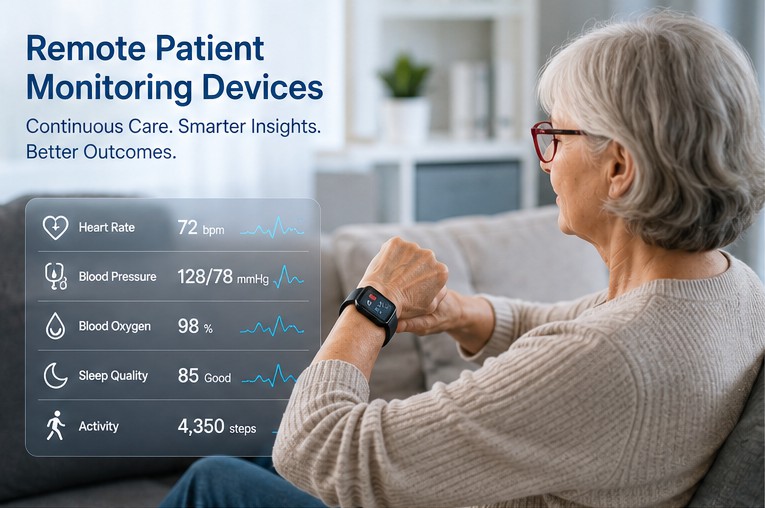
Remote Patient Monitoring (RPM) devices are connected medical devices that collect patient health data outside hospitals or clinics and securely transmit it to healthcare providers for continuous monitoring and clinical evaluation.
Unlike conventional medical equipment used only during scheduled appointments, RPM devices enable healthcare teams to observe patients throughout their daily lives. This continuous flow of health information provides valuable insights into long-term trends rather than isolated measurements.
A complete RPM ecosystem generally includes:
Connected monitoring devices
Mobile applications or gateways
Secure cloud platforms
Clinical dashboards
AI-powered analytics
Healthcare information system integration
Together, these technologies allow clinicians to detect changes earlier, prioritize high-risk patients, and provide more proactive care.
Depending on clinical needs, RPM devices can monitor a wide variety of physiological indicators, including:
Heart rate
Electrocardiogram (ECG)
Blood pressure
Blood oxygen saturation (SpO₂)
Respiratory rate
Skin temperature
Sleep quality
Physical activity
Fall events
Unlike consumer fitness devices, medical RPM solutions are designed to support healthcare workflows, improve clinical visibility, and integrate with digital healthcare platforms.
Why Choosing the Right RPM Device Matters
Many healthcare organizations assume that implementing Remote Patient Monitoring is primarily about selecting software or building a cloud platform.
In reality, the success of an RPM program often begins with the devices themselves.
Poor-quality devices may generate inconsistent data, require frequent charging, or provide an uncomfortable user experience. These issues can reduce patient compliance, create gaps in health records, and increase the workload for healthcare professionals.
By contrast, well-designed RPM devices provide reliable measurements while fitting naturally into patients' daily routines.
Healthcare organizations evaluating RPM solutions should therefore look beyond specifications and consider how devices perform in real-world clinical environments.
Important questions include:
Will patients wear the device consistently?
Is the collected data reliable enough for clinical decision-making?
Can the device integrate with existing healthcare systems?
Is it suitable for large-scale deployment?
Can firmware updates and device management be performed remotely?
Answering these questions early helps organizations build RPM programs that remain effective as patient populations grow.
Types of Remote Patient Monitoring Devices
Different healthcare scenarios require different monitoring technologies. Understanding the strengths of each device category helps healthcare providers choose solutions that match their clinical objectives.
1. Wearable Health Monitoring Devices
Wearable devices have become the fastest-growing segment of the RPM market because they allow continuous monitoring without disrupting daily life.
Instead of asking patients to perform manual measurements several times a day, wearable devices automatically collect physiological data in the background, providing clinicians with a continuous stream of health information.
Common wearable RPM devices include:
ECG smartwatches
Blood pressure watches
Wearable ECG patches
Multi-parameter health monitoring bands
Continuous heart rate monitors
Blood oxygen monitoring devices
Sleep monitoring wearables
Fall detection wearables
These products are widely used in:
Cardiac monitoring
Hypertension management
Chronic disease management
Elderly care
Home healthcare
Post-discharge recovery
One of the greatest advantages of wearable devices is their ability to generate long-term health trends rather than isolated measurements. This enables clinicians to identify gradual physiological changes that might otherwise remain undetected.
Related Solution: Medical Wearable Devices
https://iwownfit.com/healthcare-watches
2. Connected Home Medical Devices
While wearable devices provide continuous monitoring, connected home medical devices remain essential for many chronic disease management programs.
These devices perform scheduled measurements and automatically synchronize data with healthcare platforms, eliminating manual record keeping and reducing transcription errors.
Typical connected home devices include:
Blood pressure monitors
Blood glucose meters
Pulse oximeters
Smart weight scales
Digital thermometers
Spirometers
For patients managing hypertension, diabetes, or respiratory diseases, these devices provide highly accurate reference measurements that complement continuous wearable monitoring.
Rather than replacing wearable technologies, connected home medical devices often work alongside them to create a more complete picture of patient health.

3. Implantable Monitoring Devices
While wearable devices and home monitoring equipment are suitable for most RPM programs, some patients require continuous monitoring that can only be achieved through implantable technologies.
Implantable monitoring devices are primarily used in cardiology to observe heart rhythm over extended periods. These devices automatically record physiological events and securely transmit clinically relevant data to healthcare providers.
Examples include:
Implantable cardiac monitors
Implantable loop recorders
Pacemakers with remote monitoring
Implantable cardioverter-defibrillators (ICDs)
Although implantable devices represent a specialized segment of the RPM market, they demonstrate how connected healthcare continues to evolve toward continuous, long-term patient management.
4. Environmental and Safety Monitoring Devices
Modern Remote Patient Monitoring extends beyond vital signs. Healthcare providers increasingly recognize that patient behavior and living environments are equally important indicators of overall wellbeing.
Environmental monitoring technologies help caregivers understand daily activity patterns and identify potential safety risks.
Common solutions include:
Fall detection sensors
Bed occupancy monitors
Motion sensors
Sleep monitoring systems
Emergency call devices
Indoor location tracking systems
These technologies are particularly valuable in nursing homes, assisted living facilities, and home healthcare services, where early detection of mobility changes or abnormal activity can help prevent serious incidents.
Related Solution: Fall Detection System
https://iwownfit.com/solutions-fall-alert-system
How to Choose the Right Remote Patient Monitoring Devices
Selecting the right RPM devices is about much more than comparing technical specifications. Healthcare organizations should evaluate solutions from both clinical and operational perspectives.

Below are six key factors that determine whether an RPM deployment will succeed.
1. Clinical Data Reliability
Reliable clinical decisions require reliable data.
Organizations should evaluate sensor quality, signal stability, algorithm performance, and measurement consistency rather than focusing only on the number of measurable parameters.
High-quality data builds confidence among healthcare professionals and improves the effectiveness of remote care.
2. Patient Comfort and Compliance
Patient adherence is one of the biggest challenges in remote healthcare.
If devices are uncomfortable, bulky, or difficult to use, patients are less likely to wear them consistently, reducing the value of collected data.
Healthcare providers should prioritize devices that offer:
Lightweight construction
Comfortable materials
Long battery life
Water resistance
Simple user interfaces
Automatic background monitoring
Comfort directly influences compliance, and compliance determines the long-term success of an RPM program.
3. Connectivity and Data Transmission
Continuous monitoring is only valuable if data reaches clinicians reliably.
Healthcare organizations should ensure devices support secure communication technologies such as:
Bluetooth
Wi-Fi
LTE
LTE-M
NB-IoT
Equally important is the ability to cache data during temporary network interruptions and synchronize automatically once connectivity is restored.
4. Platform Integration
Modern healthcare systems rarely operate in isolation.
RPM devices should integrate with:
Electronic Health Record (EHR) systems
Telehealth platforms
Hospital information systems
Cloud dashboards
Third-party healthcare applications
Solutions that support APIs and standardized integration protocols reduce deployment complexity and improve long-term scalability.
5. Device Management at Scale
Many healthcare organizations begin with small pilot programs before expanding to hundreds or thousands of patients.
A scalable RPM solution should support:
Remote device configuration
Firmware updates
Fleet management
Centralized administration
Device health monitoring
These capabilities reduce maintenance costs and simplify large-scale deployments.
6. Manufacturer Expertise
Choosing a device is also choosing a long-term technology partner.
Healthcare organizations should evaluate whether the manufacturer can provide:
OEM/ODM customization
Technical support
Software integration
Product lifecycle management
Regulatory experience
Stable production capacity
Long-term collaboration is often just as important as the hardware itself.

Common Applications Across Healthcare
Remote Patient Monitoring devices are transforming healthcare delivery across multiple clinical settings.
Chronic Disease Management
Continuous monitoring enables healthcare providers to identify changes in chronic conditions earlier and adjust treatment plans before complications occur.
Common conditions include:
Hypertension
Diabetes
Heart failure
COPD
Cardiovascular disease
Post-Discharge Recovery
Patients recovering after surgery or hospitalization often require close observation during the first few weeks after discharge.
RPM devices allow clinicians to monitor recovery remotely while reducing unnecessary follow-up visits and hospital readmissions.
Elderly Care
Older adults frequently require long-term monitoring due to chronic diseases and increased fall risk.
Combining wearable devices with fall detection technology improves patient safety while allowing seniors to maintain greater independence.
Telehealth Services
Virtual consultations become significantly more valuable when clinicians can review objective physiological data collected through connected monitoring devices.
RPM transforms telehealth from video communication into data-driven clinical care.
Related Solution: Remote Heart Health
https://iwownfit.com/remote-patient-monitoring.html
Looking Ahead: The Future of RPM Devices
Remote Patient Monitoring is rapidly evolving beyond simple data collection.
The next generation of RPM solutions will focus on intelligent healthcare powered by artificial intelligence, predictive analytics, and connected ecosystems.
Future trends include:
AI-assisted health risk prediction
Multi-parameter wearable devices
Digital biomarkers
Personalized health recommendations
Cloud-native healthcare platforms
Greater interoperability between medical devices and healthcare information systems
Instead of reacting to illness, healthcare providers will increasingly use RPM technologies to predict health risks, intervene earlier, and deliver truly preventive care.
Conclusion
Remote Patient Monitoring devices are becoming a cornerstone of modern healthcare.
From wearable health monitors and connected home medical devices to implantable technologies and intelligent safety systems, RPM enables healthcare providers to deliver continuous, personalized care beyond traditional clinical settings.
However, successful remote monitoring is not achieved by hardware alone. Healthcare organizations should evaluate the entire ecosystem—including device reliability, patient experience, platform integration, scalability, and long-term technical support—to build sustainable and effective RPM programs.
As connected healthcare continues to evolve, organizations that invest in reliable, interoperable, and patient-friendly RPM technologies will be better positioned to improve clinical outcomes while expanding access to quality healthcare.
Frequently Asked Questions
What is the difference between RPM devices and consumer wearables?
Consumer wearables primarily focus on fitness and wellness, while RPM devices are designed to support healthcare workflows, provide clinically meaningful data, and integrate with healthcare platforms.
Which patients benefit most from RPM devices?
Patients with chronic diseases, cardiovascular conditions, diabetes, hypertension, respiratory disorders, post-surgical recovery needs, and older adults requiring continuous health monitoring are among the primary beneficiaries.
Can wearable devices replace traditional medical equipment?
Not entirely. Wearables provide continuous monitoring and long-term health trends, while traditional home medical devices remain important for scheduled clinical measurements. Together, they create a more comprehensive remote monitoring solution.
What should healthcare organizations prioritize when selecting RPM devices?
Key considerations include clinical accuracy, patient comfort, connectivity, interoperability, scalability, cybersecurity, and the manufacturer's ability to provide long-term technical support.
Call to Action
Building a successful Remote Patient Monitoring program requires more than connected devices—it requires a complete digital healthcare ecosystem.
At iWOWN, we provide medical wearable devices, IoT connectivity solutions, cloud integration capabilities, and OEM/ODM development services that help healthcare organizations and digital health companies deploy scalable RPM solutions.
Whether you're developing a telehealth platform, expanding chronic disease management services, or launching a customized wearable healthcare product, our team is ready to help you build a solution tailored to your clinical and business goals.
Learn more about our Medical Wearable Devices:
https://iwownfit.com/healthcare-watches
Contact our healthcare experts:
https://iwownfit.com/contact-us#module_729371366









Remote Patient Monitoring Devices: Types, Benefits & Buying Guide for Healthcare Providers
2026-07-08 14:29:05
Click:
“
Remote Patient Monitoring Devices: The Foundation of Modern Connected Healthcare
”
Remote Patient Monitoring Devices: The Foundation of Modern Connected Healthcare
Healthcare is no longer confined to hospitals and clinics. As populations age, chronic diseases become more prevalent, and healthcare resources remain under increasing pressure, providers are looking for smarter ways to deliver continuous, high-quality care without increasing operational costs.
This is where Remote Patient Monitoring (RPM) is making a significant impact.
By enabling healthcare professionals to monitor patients outside traditional clinical environments, RPM helps bridge the gap between routine appointments and real-life health conditions. Instead of relying solely on occasional measurements taken during hospital visits, clinicians can access continuous physiological data collected through connected monitoring devices.
However, technology alone does not guarantee the success of an RPM program.
The effectiveness of remote monitoring largely depends on selecting the right devices—devices that provide reliable clinical data, integrate seamlessly with healthcare platforms, encourage long-term patient adherence, and scale efficiently as programs expand.
Whether you're planning a hospital-based RPM initiative, building a telehealth platform, or sourcing medical wearables for an OEM project, understanding today's Remote Patient Monitoring devices is the first step toward developing a successful connected healthcare solution.
What Are Remote Patient Monitoring Devices?
Remote Patient Monitoring (RPM) devices are connected medical devices that collect patient health data outside hospitals or clinics and securely transmit it to healthcare providers for continuous monitoring and clinical evaluation.
Unlike conventional medical equipment used only during scheduled appointments, RPM devices enable healthcare teams to observe patients throughout their daily lives. This continuous flow of health information provides valuable insights into long-term trends rather than isolated measurements.
A complete RPM ecosystem generally includes:
Connected monitoring devices
Mobile applications or gateways
Secure cloud platforms
Clinical dashboards
AI-powered analytics
Healthcare information system integration
Together, these technologies allow clinicians to detect changes earlier, prioritize high-risk patients, and provide more proactive care.
Depending on clinical needs, RPM devices can monitor a wide variety of physiological indicators, including:
Heart rate
Electrocardiogram (ECG)
Blood pressure
Blood oxygen saturation (SpO₂)
Respiratory rate
Skin temperature
Sleep quality
Physical activity
Fall events
Unlike consumer fitness devices, medical RPM solutions are designed to support healthcare workflows, improve clinical visibility, and integrate with digital healthcare platforms.
Why Choosing the Right RPM Device Matters
Many healthcare organizations assume that implementing Remote Patient Monitoring is primarily about selecting software or building a cloud platform.
In reality, the success of an RPM program often begins with the devices themselves.
Poor-quality devices may generate inconsistent data, require frequent charging, or provide an uncomfortable user experience. These issues can reduce patient compliance, create gaps in health records, and increase the workload for healthcare professionals.
By contrast, well-designed RPM devices provide reliable measurements while fitting naturally into patients' daily routines.
Healthcare organizations evaluating RPM solutions should therefore look beyond specifications and consider how devices perform in real-world clinical environments.
Important questions include:
Will patients wear the device consistently?
Is the collected data reliable enough for clinical decision-making?
Can the device integrate with existing healthcare systems?
Is it suitable for large-scale deployment?
Can firmware updates and device management be performed remotely?
Answering these questions early helps organizations build RPM programs that remain effective as patient populations grow.
Types of Remote Patient Monitoring Devices
Different healthcare scenarios require different monitoring technologies. Understanding the strengths of each device category helps healthcare providers choose solutions that match their clinical objectives.
1. Wearable Health Monitoring Devices
Wearable devices have become the fastest-growing segment of the RPM market because they allow continuous monitoring without disrupting daily life.
Instead of asking patients to perform manual measurements several times a day, wearable devices automatically collect physiological data in the background, providing clinicians with a continuous stream of health information.
Common wearable RPM devices include:
ECG smartwatches
Blood pressure watches
Wearable ECG patches
Multi-parameter health monitoring bands
Continuous heart rate monitors
Blood oxygen monitoring devices
Sleep monitoring wearables
Fall detection wearables
These products are widely used in:
Cardiac monitoring
Hypertension management
Chronic disease management
Elderly care
Home healthcare
Post-discharge recovery
One of the greatest advantages of wearable devices is their ability to generate long-term health trends rather than isolated measurements. This enables clinicians to identify gradual physiological changes that might otherwise remain undetected.
Related Solution: Medical Wearable Devices
https://iwownfit.com/healthcare-watches
2. Connected Home Medical Devices
While wearable devices provide continuous monitoring, connected home medical devices remain essential for many chronic disease management programs.
These devices perform scheduled measurements and automatically synchronize data with healthcare platforms, eliminating manual record keeping and reducing transcription errors.
Typical connected home devices include:
Blood pressure monitors
Blood glucose meters
Pulse oximeters
Smart weight scales
Digital thermometers
Spirometers
For patients managing hypertension, diabetes, or respiratory diseases, these devices provide highly accurate reference measurements that complement continuous wearable monitoring.
Rather than replacing wearable technologies, connected home medical devices often work alongside them to create a more complete picture of patient health.
3. Implantable Monitoring Devices
While wearable devices and home monitoring equipment are suitable for most RPM programs, some patients require continuous monitoring that can only be achieved through implantable technologies.
Implantable monitoring devices are primarily used in cardiology to observe heart rhythm over extended periods. These devices automatically record physiological events and securely transmit clinically relevant data to healthcare providers.
Examples include:
Implantable cardiac monitors
Implantable loop recorders
Pacemakers with remote monitoring
Implantable cardioverter-defibrillators (ICDs)
Although implantable devices represent a specialized segment of the RPM market, they demonstrate how connected healthcare continues to evolve toward continuous, long-term patient management.
4. Environmental and Safety Monitoring Devices
Modern Remote Patient Monitoring extends beyond vital signs. Healthcare providers increasingly recognize that patient behavior and living environments are equally important indicators of overall wellbeing.
Environmental monitoring technologies help caregivers understand daily activity patterns and identify potential safety risks.
Common solutions include:
Fall detection sensors
Bed occupancy monitors
Motion sensors
Sleep monitoring systems
Emergency call devices
Indoor location tracking systems
These technologies are particularly valuable in nursing homes, assisted living facilities, and home healthcare services, where early detection of mobility changes or abnormal activity can help prevent serious incidents.
Related Solution: Fall Detection System
https://iwownfit.com/solutions-fall-alert-system
How to Choose the Right Remote Patient Monitoring Devices
Selecting the right RPM devices is about much more than comparing technical specifications. Healthcare organizations should evaluate solutions from both clinical and operational perspectives.
Below are six key factors that determine whether an RPM deployment will succeed.
1. Clinical Data Reliability
Reliable clinical decisions require reliable data.
Organizations should evaluate sensor quality, signal stability, algorithm performance, and measurement consistency rather than focusing only on the number of measurable parameters.
High-quality data builds confidence among healthcare professionals and improves the effectiveness of remote care.
2. Patient Comfort and Compliance
Patient adherence is one of the biggest challenges in remote healthcare.
If devices are uncomfortable, bulky, or difficult to use, patients are less likely to wear them consistently, reducing the value of collected data.
Healthcare providers should prioritize devices that offer:
Lightweight construction
Comfortable materials
Long battery life
Water resistance
Simple user interfaces
Automatic background monitoring
Comfort directly influences compliance, and compliance determines the long-term success of an RPM program.
3. Connectivity and Data Transmission
Continuous monitoring is only valuable if data reaches clinicians reliably.
Healthcare organizations should ensure devices support secure communication technologies such as:
Bluetooth
Wi-Fi
LTE
LTE-M
NB-IoT
Equally important is the ability to cache data during temporary network interruptions and synchronize automatically once connectivity is restored.
4. Platform Integration
Modern healthcare systems rarely operate in isolation.
RPM devices should integrate with:
Electronic Health Record (EHR) systems
Telehealth platforms
Hospital information systems
Cloud dashboards
Third-party healthcare applications
Solutions that support APIs and standardized integration protocols reduce deployment complexity and improve long-term scalability.
5. Device Management at Scale
Many healthcare organizations begin with small pilot programs before expanding to hundreds or thousands of patients.
A scalable RPM solution should support:
Remote device configuration
Firmware updates
Fleet management
Centralized administration
Device health monitoring
These capabilities reduce maintenance costs and simplify large-scale deployments.
6. Manufacturer Expertise
Choosing a device is also choosing a long-term technology partner.
Healthcare organizations should evaluate whether the manufacturer can provide:
OEM/ODM customization
Technical support
Software integration
Product lifecycle management
Regulatory experience
Stable production capacity
Long-term collaboration is often just as important as the hardware itself.
Common Applications Across Healthcare
Remote Patient Monitoring devices are transforming healthcare delivery across multiple clinical settings.
Chronic Disease Management
Continuous monitoring enables healthcare providers to identify changes in chronic conditions earlier and adjust treatment plans before complications occur.
Common conditions include:
Hypertension
Diabetes
Heart failure
COPD
Cardiovascular disease
Post-Discharge Recovery
Patients recovering after surgery or hospitalization often require close observation during the first few weeks after discharge.
RPM devices allow clinicians to monitor recovery remotely while reducing unnecessary follow-up visits and hospital readmissions.
Elderly Care
Older adults frequently require long-term monitoring due to chronic diseases and increased fall risk.
Combining wearable devices with fall detection technology improves patient safety while allowing seniors to maintain greater independence.
Telehealth Services
Virtual consultations become significantly more valuable when clinicians can review objective physiological data collected through connected monitoring devices.
RPM transforms telehealth from video communication into data-driven clinical care.
Related Solution: Remote Heart Health
https://iwownfit.com/remote-patient-monitoring.html
Looking Ahead: The Future of RPM Devices
Remote Patient Monitoring is rapidly evolving beyond simple data collection.
The next generation of RPM solutions will focus on intelligent healthcare powered by artificial intelligence, predictive analytics, and connected ecosystems.
Future trends include:
AI-assisted health risk prediction
Multi-parameter wearable devices
Digital biomarkers
Personalized health recommendations
Cloud-native healthcare platforms
Greater interoperability between medical devices and healthcare information systems
Instead of reacting to illness, healthcare providers will increasingly use RPM technologies to predict health risks, intervene earlier, and deliver truly preventive care.
Conclusion
Remote Patient Monitoring devices are becoming a cornerstone of modern healthcare.
From wearable health monitors and connected home medical devices to implantable technologies and intelligent safety systems, RPM enables healthcare providers to deliver continuous, personalized care beyond traditional clinical settings.
However, successful remote monitoring is not achieved by hardware alone. Healthcare organizations should evaluate the entire ecosystem—including device reliability, patient experience, platform integration, scalability, and long-term technical support—to build sustainable and effective RPM programs.
As connected healthcare continues to evolve, organizations that invest in reliable, interoperable, and patient-friendly RPM technologies will be better positioned to improve clinical outcomes while expanding access to quality healthcare.
Frequently Asked Questions
What is the difference between RPM devices and consumer wearables?
Consumer wearables primarily focus on fitness and wellness, while RPM devices are designed to support healthcare workflows, provide clinically meaningful data, and integrate with healthcare platforms.
Which patients benefit most from RPM devices?
Patients with chronic diseases, cardiovascular conditions, diabetes, hypertension, respiratory disorders, post-surgical recovery needs, and older adults requiring continuous health monitoring are among the primary beneficiaries.
Can wearable devices replace traditional medical equipment?
Not entirely. Wearables provide continuous monitoring and long-term health trends, while traditional home medical devices remain important for scheduled clinical measurements. Together, they create a more comprehensive remote monitoring solution.
What should healthcare organizations prioritize when selecting RPM devices?
Key considerations include clinical accuracy, patient comfort, connectivity, interoperability, scalability, cybersecurity, and the manufacturer's ability to provide long-term technical support.
Call to Action
Building a successful Remote Patient Monitoring program requires more than connected devices—it requires a complete digital healthcare ecosystem.
At iWOWN, we provide medical wearable devices, IoT connectivity solutions, cloud integration capabilities, and OEM/ODM development services that help healthcare organizations and digital health companies deploy scalable RPM solutions.
Whether you're developing a telehealth platform, expanding chronic disease management services, or launching a customized wearable healthcare product, our team is ready to help you build a solution tailored to your clinical and business goals.
Learn more about our Medical Wearable Devices:
https://iwownfit.com/healthcare-watches
Contact our healthcare experts:
https://iwownfit.com/contact-us#module_729371366


Copyright © 2025 iwownfit. All Rights Reserved.
Copyright © Shenzhen IWOWN Technology Co.,Ltd. All Rights Reserved.
 Cherry